We earn a commission if you buy through our links, at no cost to you. Disclosure
Alternatives to Red Ball · waders from other makers
| Model | Height | Material type | Insulation | Warranty | Amazon |
|---|---|---|---|---|---|
Banded Black Label Elite Zipper Uninsulated WaderWaders · alternative More specs
| Chestlisting | Breathablemaker | 1,600 g bootsclaimed | 2-year full wader warrantymaker | See it on Amazon |
Banded Black Label Elite Insulated WaderWaders · alternative More specs
| — | Breathablemaker | 1,600 g bootsclaimed | 2-year full wader warrantymaker | See it on Amazon |
Drake Waterfowl Insulated Guardian Elite HND Front Zip WaderWaders · alternative More specs
| Chestlisting | Breathablemaker | 1,600 g bootsclaimed | 3-year (Drake wader warranty)maker | See it on Amazon |
Drake Waterfowl Hybrid Insulated Guardian Elite HND Front Zip WaderWaders · alternative More specs
| Chestlisting | Breathablemaker | 1,600 g bootsclaimed | 3-year (Drake wader warranty)maker | See it on Amazon |
Drake Waterfowl BMF1600 Kevlar WaderWaders · alternative More specs
| Chestlisting | Breathablemaker | 1,600 g bootsclaimed | 4-year (Drake wader warranty)maker | See it on Amazon |
Frogg Toggs Amphib 3.5mm Neoprene Bootfoot Chest Wader (Mossy Oak Bottomland)Waders · alternative More specs
| Chestlisting | Neoprenemaker | 600 g bootsclaimed | 1 yearmaker | See it on Amazon |
Drake Waterfowl Uninsulated Guardian Elite Vanguard Breathable WaderWaders · alternative More specs
| Chestlisting | Breathablemaker | 1,600 g bootsclaimed | 3-year (Drake wader warranty)maker | See it on Amazon |
Banded Phantom X Breathable Insulated WaderWaders · alternative More specs
| Chestlisting | Breathablemaker | 1,600 g bootsclaimed | 2-year warrantymaker | See it on Amazon |
Banded Phantom X Breathable Uninsulated WaderWaders · alternative More specs
| Chestlisting | Breathablemaker | 1,600 g bootsclaimed | 2-year warrantymaker | See it on Amazon |
Drake Waterfowl Hardline Insulated Breathable WaderWaders · alternative More specs
| Chestlisting | Breathablemaker | 800 g bootsclaimed | 3-year (Drake wader warranty)maker | See it on Amazon |
Drake Waterfowl Uninsulated Guardian Elite HND Front Zip WaderWaders · alternative More specs
| Chestlisting | Breathablemaker | 1,600 g bootsclaimed | 3-year (Drake wader warranty)maker | See it on Amazon |
Frogg Toggs Amphib Neoprene Cleated Bootfoot Chest WaderWaders · alternative More specs
| Chestlisting | Neoprenemaker | 200 g bootsclaimed | 1 yearmaker | See it on Amazon |
Avery Originals Breathable Insulated WC WaderWaders · alternative More specs
| Chestlisting | Breathablemaker | 1,600 g bootsclaimed | 1-year warranty for manufacturer defectmaker | See it on Amazon |
Drake Waterfowl Hardline Uninsulated Breathable WaderWaders · alternative More specs
| Chestlisting | Breathablemaker | 800 g bootsclaimed | 3-year (Drake wader warranty)maker | See it on Amazon |
Drake Waterfowl Buckshot Eqwader 1600 Neoprene Wader 3.0Waders · alternative More specs
| Chestlisting | Neoprenemaker | 1,600 g bootsclaimed | 3-year (Drake wader warranty)maker | See it on Amazon |


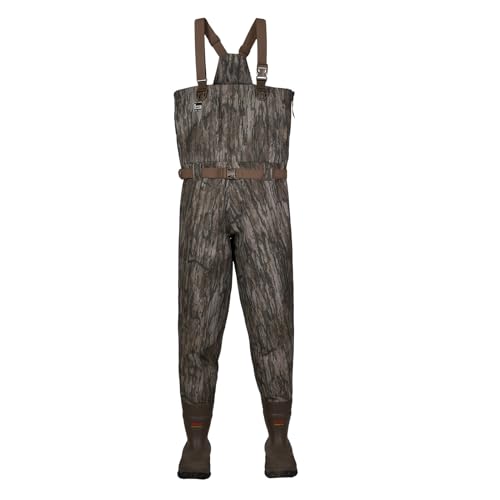


How alternatives are pickedProducts of the same type from other brands, closest first: same price tier as Red Ball's own listings at our last check, then the most maker-published specs. No popularity, no paid placement.
Which Red Ball model, if any
Where the Red Ball name comes from
The name is older than most of the waders you will ever own. According to the local-history account we read, a red ball was added to the band of knitted boots made by the Mishawaka Woolen Manufacturing Company in 1891 and registered as a trademark in 1901, which is how the Ball-Band name came about. The company made rubber footwear from the late 1890s, was bought by United States Rubber in 1922, and was dissolved in 1969. A 1964 print advertisement, which we found in a period-paper listing, offered Red Ball salt water waders from Red Ball Footwear by Ball-Band in Mishawaka, Indiana.
That is the extent of what we can say with a source. We opened a trademark record that lists RED BALL for boots, rubbers and waders under LaCrosse Footwear, Inc., filed in 1956. We did not find a maker page for current Red Ball waders, and we did not find any Red Ball pairs among the Amazon US listings we track. If you see a Red Ball wader for sale, it may be old stock or used. Check the seller, the age of the rubber and the return terms before you decide.
I'll add one honest note. The trademark record is only a filing, and the history account is a local museum's summary, so I have kept to the dates they give and left out anything else I could not source.
What people usually mean by "Red Ball waders"
The searches we see for this brand are for chest waders, insulated chest waders and hip waders. That points to a particular kind of wader: boots attached to the legs, a rubber or neoprene body, and a use that is more marsh and mud than mountain stream. In the trade this is called bootfoot, and the pair is usually sold for hunting or general wet work. (If you are after something to fish a river in, our stockingfoot waders page is a better starting point, because a separate wading boot gives you more support for a long walk.)
So the alternatives in the table follow that type. They are bootfoot chest waders from Banded, Drake Waterfowl, frogg toggs and Avery, and there is no stockingfoot pair among them. We chose them on four things: the same type, a hunting or fishing-and-hunting use, the closest price tier, and the most maker-confirmed specs, which gave a spread of warm and cool options. They are not the cheapest pairs on Amazon, and the list says nothing about which are best. For a wider look, see all bootfoot waders, neoprene waders and insulated waders.
How to read the alternatives table
Each value in the table carries a small mark. Maker means the manufacturer's own page states it. Claimed means it is a manufacturer's claim, such as a number of layers or a membrane name, with no independent lab or standard behind it. Listing means we took it from the Amazon listing and the maker has not confirmed it. A dash means we could not confirm it anywhere, and we do not guess. Under each model name, the "More specs" toggle shows the rest of what we know.
Most of the pairs here are listed with a Chest height. A chest wader keeps you dry to the middle of your chest, which is the right height when you may wade deep or kneel. A hip wader is a pair of separate legs that stop around the top of the thigh, which is lighter and quicker to put on but gives you no margin for a deep step. The difference between the two is a safety question as much as a comfort one, so be honest about how deep you will go. We have more on that in our hip waders and chest waders pages.
The Material type column splits the list in two. Neoprene pairs, such as the frogg toggs Amphib models, are made of thick foamed rubber that insulates by itself. Breathable pairs, which are the rest, use a laminate that lets sweat vapor out. The two behave differently on the water, and our breathable vs neoprene guide explains why. The short version is that neoprene is warm when you stand still and hot when you walk, and breathable is the other way round.
Choosing between them
Start with the water temperature and how much you will move.
For cold, still water and a lot of standing (a blind, a boat ramp, a slow back channel), neoprene or a heavily insulated breathable pair is the better match. The frogg toggs Amphib 3.5 mm neoprene pair lists 600 g boots on the maker's page, and the Banded and Drake insulated pairs list 1,600 g boots, with Drake's Hardline at 800 g. A grams figure for boot insulation is the maker's own claim, and it is a ratio of fill weight rather than a warmth rating. A bigger number is warmer, but there is no standard for it, so compare within a maker before you compare across makers.
For mixed weather and walking, choose a breathable pair and add or remove layers. Banded's Phantom X lists a stated comfort range (32 to 70 degrees F for the uninsulated version, minus 10 to 50 degrees F for the insulated one), which is more useful than a bare grams figure because it tells you the temperatures the maker had in mind. Banded lists the Black Label Elite and Phantom X membranes as its SHEDS waterproof breathable technology, and the layers (five and three respectively) are maker claims.
For rough ground, look at the knees. Several of the pairs list reinforced knees (the frogg toggs Amphib, the Drake BMF1600 and the Avery Originals), and the Drake BMF1600 is listed with a Kevlar build. Kneeling in a blind or climbing over logs is where the first abrasion usually appears.
And for the long term, read the warranty column. The pairs here list warranties from one to four years, with Drake's longest at four on the BMF1600. A warranty is not a promise of how long the wader lasts, but it is a statement of how long the maker will stand behind the seams. (The Seam, for the record, has its own opinion of every warranty, and it is usually that the warranty will outlast the patience of the person filing it.)
Fit and sizing for bootfoot waders
Bootfoot waders are sized twice, once for the boot and once for the body, and the two do not always agree. Measure your chest, waist and inseam, then compare with the maker's chart. On this list those charts are linked from each maker's page, and Banded and Drake each list Tall or Stout options, so look for a fit that matches your build before you look at the camouflage.
For the boot, a common rule from makers is to match your normal shoe size and go up if you are between sizes or wear thick socks. A boot that is too snug compresses your socks, and compressed socks insulate poorly. Our wader size chart guide goes through how to measure.
Care and checking for leaks
Rubber and neoprene age even when you do not use them. Sunlight, heat and folded storage all shorten a pair's life, so hang waders out of direct sun, rinse mud off the boots and let the inside dry fully before you put them away. Our guides on cleaning and storing waders cover the routine, and if a pair starts to leak, finding a leak is the first step before you buy a repair kit. A wading belt is not optional on any chest wader: cinched snugly at the waist, it keeps a slip from turning into a flooded leg.
If you are looking at old or used stock
Because the Red Ball name has such a long history, a lot of what turns up under it is secondhand. Rubber footwear ages in ways that are hard to see. The material can stiffen, crack at the flex points on the boot, or separate where the boot meets the leg, and a pair that looks fine on a shelf can fail on its first wet day. Neoprene can lose its stretch and its seams can go brittle. None of that is a reason to avoid the name, but it is a reason to treat any old pair as unproven until you have checked it.
A reasonable routine is to inspect the boot soles and the inside of the legs, run your hands along the seams for tackiness or cracking, and check the pair for leaks before you take it anywhere cold or deep. Our leak-finding guide explains how. It is also worth reading the return terms, because an old pair from a marketplace seller may have none. A new pair from a current maker, by contrast, comes with a stated warranty, and in this table that ranges from one year to four.
What to check before buying any pair
Look at the foot type first. Bootfoot means the boot comes attached and you cannot swap it. Look at the height. Look at the insulation figure and what it applies to, because on several of these pairs the figure describes the boot, not the body. Look at the warranty term. Finally, open the maker's size chart in another tab and compare it with your own tape-measure numbers, not your clothing sizes.
If you want a broader view of the category, our waders page explains the types, and the best waders list applies a written rule to the whole range.
Where Red Ball shows up
Often compared
Questions about Red Ball
Are Red Ball waders still made?
We could not confirm it. We found no Red Ball waders among the Amazon US listings we track, and we did not find a current maker page for them. A trademark record lists RED BALL for boots, rubbers and waders under LaCrosse Footwear, but that record is from 1956 and does not tell you whether the mark is in use today. If you want to know, ask the maker or a retailer that sells LaCrosse waders.
Who owns the Red Ball name?
The only source we opened is a trademark listing from 1956 that names LaCrosse Footwear, Inc. as the owner of RED BALL for boots, rubbers and waders. We could not confirm who owns the name today, so we are not going to guess.
Are the waders in the table the same as Red Ball waders?
No. They are from other makers and have their own warranties, sizing and construction. We picked them because they are the same type (bootfoot waders with the boot attached), mostly the same use (hunting and general wet work) and have the most maker-confirmed specs. They are alternatives, not rebadged Red Ball pairs.
Should I buy used Red Ball waders?
Used waders of any brand are a gamble, because the failure points are the seams, the boot-to-leg joint and the rubber, and none of those show up in a photo. If you do buy used, ask for a description of any patches, look at the boot soles for cracking, and plan to fill the waders with water or check them with a flashlight before you rely on them. Our guide to finding a leak walks through it.
What is the difference between neoprene and breathable bootfoot waders?
Neoprene is a foamed rubber that insulates by itself and is thick, so it suits cold water and standing still. Breathable waders use a thin laminate that lets sweat vapor out and rely on what you wear underneath for warmth, so they suit walking and changing temperatures. The table includes both, and the Material type column tells you which is which.
How do I size bootfoot waders?
Match your regular shoe size to the boot, and go up a size if you are between sizes or plan to wear thick socks, because a boot that squeezes your socks makes your feet colder. Then check the body: chest, waist and inseam against the maker's chart, since the body sizes and the boot sizes are separate on most of these pairs.
Sources
- History Museum (South Bend): Mishawaka Woolen Company and Ball-Band rubber — accessed 2026-10-15
- 1964 advertisement: Red Ball salt water waders — accessed 2026-10-15
- Justia Trademarks: LaCrosse Footwear, Inc. — accessed 2026-10-15
- Banded: Phantom X Breathable Uninsulated Wader — accessed 2026-10-15
- Drake Waterfowl: BMF1600 Kevlar Wader — accessed 2026-10-15
- frogg toggs: Amphib 3.5mm Neoprene Bootfoot Wader — accessed 2026-10-15