We earn a commission if you buy through our links, at no cost to you. Disclosure
| Model | Folding / collapsible | Length (extended) | Shaft material | Holster / sheath included | Amazon |
|---|---|---|---|---|---|
| Yeslisting | 4'7"listing | Aluminumlisting | Yeslisting | See it on Amazon | |
| Yeslisting | 4'7"listing | Aluminumlisting | Yeslisting | See it on Amazon | |
| Yeslisting | 4'7"listing | Aluminumlisting | — | See it on Amazon | |
Creative Angler Hiking-Wading StaffWading staff | Yeslisting | 4'7"listing | Aluminumlisting | — | See it on Amazon |
Creative Angler Wading StaffWading staff | Yeslisting | — | — | — | See it on Amazon |
Hammers Collapsible Wading Staff FP1Wading staff | Yeslisting | 4'4"listing | Aluminumlisting | — | See it on Amazon |
Hammers Collapsible Wading Staff Tall VersionWading staff | Yeslisting | 5'3"listing | Aluminumlisting | — | See it on Amazon |
Maxcatch Foldable Wading Staff T7075Wading staff | Yeslisting | — | Aluminumlisting | — | See it on Amazon |
Maxcatch Folding Wading Staff 55"Wading staff | Yesmaker | 4'7"maker | Aluminummaker | Yesmaker | See it on Amazon |
MOJO Outdoors The Knot Wading Pole HW2201Wading staff | — | 5'0"listing | — | — | See it on Amazon |
Simms Wading StaffWading staff | Yesmaker | 4'7"maker | Aluminummaker | Yesmaker | See it on Amazon |
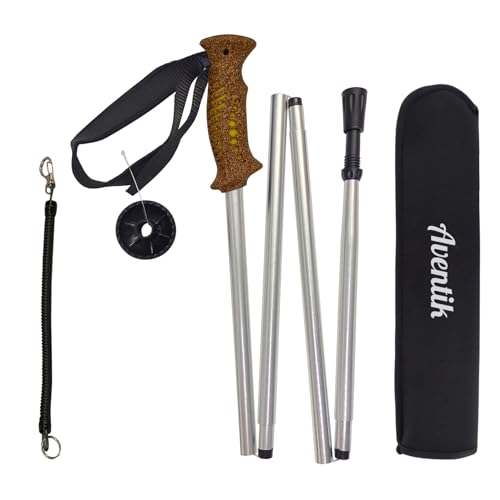




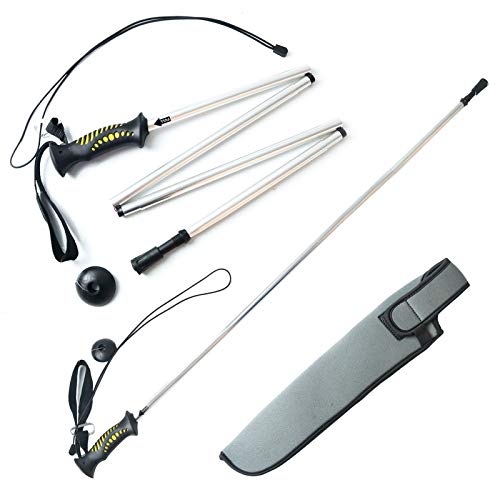


What's in this tableWading staffs and sticks we track on Amazon US.
What a wading staff is, and who needs one
A wading staff is a stick with a job. In moving water, with a bottom you cannot see, a staff gives you a third point of contact and a way to test the next step. It is the same idea as a trekking pole, adapted for rivers: it works with your feet, not instead of them.
I'd consider one for any river with real current, a slick or rocky bottom, or water that colors up so you can't see where you are putting your boots. In a shallow, slow creek with a sandy floor, you may not need it. The Orvis wading guide, the source for the technique below, says a staff improves your stability and lets you probe the depth and firmness of the bottom. It also says a sturdy riverbank stick is an acceptable substitute, which is a fair reminder that the technique matters more than the brand.
How to use a wading staff
These are the points from the Orvis guide, in plain words:
- Hold it on your downstream side. That is true for right-handed and left-handed anglers. The current pushes on you, and the staff, held downstream, helps offset that pressure.
- Keep three points of contact when you stand still. That is both feet and the staff.
- Keep two when you lift a foot. The staff and the foot that stays down, while the other foot moves.
- Probe before you step. Use the staff to feel the depth and firmness of the bottom.
Beyond that, my own advice, which is editorial and not instruction from a maker: take short steps, move one point at a time, and turn back if you feel uncomfortable. A staff helps with balance. It does not remove the risk of a fall, and it does not do the work of a wading belt or a life jacket. Our waders page covers the rest of the safety kit.
Folding staffs and fixed poles
Most products in the table are listed as folding or collapsible. The Orvis guide says folding models fit in a sheath on your wading belt, and I think that is the main attraction: the staff rides at your hip while you cast and comes out when the water gets pushy. A fixed pole is simpler, with no joints to fail, but it is a long stick to carry through brush. The MOJO Outdoors Knot Wading Pole in our table is listed at 60 inches and does not state a folding design, so it is the one to look at if you want a longer, fixed-style pole. Check the listing for how it travels.
The Hammers staffs come in two lengths, 52 inches and 63 inches, which is the widest spread in the table. Aventik, Creative Angler and Maxcatch list 55 inch models. The Simms Wading Staff is listed at 54.75 inches.
How to read the table
Each value carries a small mark. Maker means it came from the manufacturer's own page. Claimed marks a maker's own claim with no independent standard behind it. Listing means it came from the Amazon listing only, so treat it as the seller's statement. A dash (—) means we could not confirm it, and we do not guess. The columns for this type are:
- Folding / collapsible says whether the staff folds into sections.
- Length (extended) is the full length in inches, with the staff opened.
- Shaft material is the material of the staff body.
- Holster / sheath included says whether the staff comes with a holster or sheath for a belt.
Most staff values come from the Amazon listing, not the maker, so you will see the listing mark often. Only the Maxcatch 55 inch staff and the Simms Wading Staff have maker-stated values for folding, length, material and holster in our data. Where a value is missing, treat it as unknown. A missing holster does not mean the staff has none, and a missing length does not mean it is short.
What to look at
Length. Stated lengths run from 52 inches to 63 inches where known, and the common 55 inch size sits in the middle. I'd pick a length that lets you hold the handle with your forearm roughly level and your shoulder relaxed. That is my rule of thumb, not a maker's measurement.
Folding design. If you plan to carry the staff on your belt, a folding model with a holster is the practical choice. In the table, a holster is listed for the two Aventik models, the Maxcatch 55 inch staff and the Simms Wading Staff. Other products show no holster data, so check the listing.
Shaft material. Aluminum is the only material stated in our data, and it is listed for most of the products. Treat the listing-sourced entries as the seller's claim.
Handle. The Aventik listing title mentions a cork handle, and another Aventik title mentions a long handle. The table does not have a handle column, so open the listing photos and read the description. A handle you can grip with a wet or gloved hand is the one you want.
Weight and load rating. The table has no weight column. None of the listings in our data states a load rating, so I can't tell you what the staffs are designed to hold. Read the maker's page before you lean on one.
Choosing between them
For a day on a river with current. I'd want a folding staff with a holster on the belt, so it is with me and out of the way. Check that the belt you wear can take a holster. See wading belts, where the "Holds" column shows which belts carry accessories.
For occasional use. A basic folding staff is enough. There is no need to overthink length.
For tall anglers or deep wading. A longer model such as the 63 inch Hammers Tall may suit, though I'd try it before relying on it. Nothing in our data says what height each length is meant for.
For travel. A folding staff packs smaller. Check the folded length in the listing, since our table does not carry it.
Checking a listing before you buy
Because most of the staff data comes from Amazon listings, I'd run through a short list before ordering. First, find the length and check it against the table, since two listings from one brand can differ. Second, look for the word "holster" or "sheath" in the description and the photos, and see whether the staff ships with one. Third, read how the sections lock, and look for the maker's name on the lock or the tip, which tells you who to ask if it fails. Fourth, read the tip: a rubber or metal tip behaves differently on rock, and the listing should say which you get. If any of these are missing, treat the staff as unconfirmed and ask the seller, or look for the maker's own page.
Matching the staff to the bottom
Sand and gravel are forgiving, and a staff mostly gives you balance and depth information there. Slick cobble and ledge rock are where the staff earns its keep, since it gives you a third point of contact on footing that moves. Mud is a different problem: a staff probes it, and you learn how deep the soft layer is before your boot does. In each case the technique from the Orvis guide holds, with the staff downstream and your steps short. If a bottom looks like it is beyond what you can read, the safest answer is not to wade it.
Common mistakes
- Holding the staff on the upstream side. Orvis says downstream.
- Leaning on a staff you have not checked. Open it, lock it and press down on it on dry ground before you step in.
- Using the staff instead of a belt. They do different jobs.
- Skipping the holster. A staff that lives in your hand gets in the way of casting, and a staff that lives in your car does nothing.
- Trusting a single listing. Several of the values here come from the Amazon listing and may not match the maker's page. Check before you buy.
Care in brief
Rinse the staff after use, particularly if you fish brackish or salt water, and let it dry before folding it away. Look at the joints, the lock and the tip for wear at the start of each season. Replace a staff whose lock slips or whose tip is worn through.
Brands in the table
Creative Angler has three staffs in the table, Aventik, Hammers and Maxcatch have two each, and MOJO Outdoors and Simms have one each. Read more about Aventik, Maxcatch and Simms, or browse the brand catalog. For the wader the staff goes with, read about chest waders.
Brands in this table
Related
Questions people ask
How do you use a wading staff?
The Orvis wading guide gives the basics. Hold the staff on your downstream side, whether you are right- or left-handed, so it helps offset the pressure of the current. Keep three points of contact when you stand still, which is two feet and the staff, and two points when you lift a foot to step, which is the staff and the foot still on the bottom. The staff also lets you probe the depth and firmness of the bottom ahead of you.
What is a wading staff for?
Stability and information. Orvis says a staff improves your stability in the water and lets you probe how deep and firm the bottom is. It does not replace a wading belt, and it does not make deep or fast water safe.
Do I need a wading staff?
If you wade in current or over uneven or slippery bottoms, I'd carry one. If you fish shallow, gentle water and rarely get past your knees, you may not miss it. Orvis notes that a sturdy stick from the riverbank is an acceptable substitute, which tells you the idea matters more than the product.
What length should a wading staff be?
The listings in our table run from 52 inches to 63 inches where a length is stated, with 55 inches the most common. None of the makers in our data gives a height rule, so I'd try the staff upright and check that you can hold it comfortably with your arm relaxed. Some staffs are adjustable or fold into sections, so check how the length is measured in the description.
Is a folding wading staff better than a fixed one?
It is more convenient to carry. Orvis says folding models fit in a sheath on your wading belt, so the staff is out of the way when you cast and ready when you need it. Folding staffs have joints, so check the maker's description for how the sections lock. In the table, the staffs with a stated holster or sheath are the Aventik pair, the Maxcatch 55 inch staff and the Simms Wading Staff.
What are wading staffs made of?
In our data, where a shaft material is stated, it is aluminum, and for several of those the source is the Amazon listing. Some products show a dash for material because we could not confirm it. Aluminum is light and stiff. Check the maker's page for the wall thickness and any weight rating, since none of the listings in our data states a load limit.
Can I use a hiking pole as a wading staff?
People do, but I can't give you a safe-use claim from any maker in our table. A hiking pole is a different product, and I can't point to a maker statement in our data that covers using one in current. Check the maker's instructions for the pole you own, and consider whether it will fit a belt sheath.
Sources
- Orvis: Freshwater wading tips for moving water — accessed 2026-10-15