The short answer
Carp are a stalking fish. You find them on shallow flats, you approach quietly, you cast accurately and softly, and then you hold on. The outfit is sized for the second half of that: an 8-weight-ish rod, a floating line, a reel with a smooth drag and a leader you could land a bass with.
Sports Illustrated puts the rod at 7 to 9 weight, with a 7-weight the author's favorite. ToFlyFish goes wider, recommending 7 to 10 weight, with an 8-weight as the good all-round choice. I have not fished for carp myself. What follows summarises those two sources, and flags where they differ.
Rod weight and reel
Both sources say you need a rod with a soft tip for quiet presentation and a strong backbone for the fight. ToFlyFish adds that a heavier rod suits large fish in big water and longer casts or bigger flies in wind, while big carp in shallow water call for a softer, lighter rod. It suggests a 9-weight if you meet many fish over 18 pounds.
A practical reading:
- 7-weight: shallow flats, calm days, fish that are not huge.
- 8-weight: the all-rounder, and the one both ranges include.
- 9-weight: big fish, wind, or bigger flies.
Our 8-weight fly rods page is the best starting table, and the fly rod weight chart guide explains what the numbers mean.
On the reel, Sports Illustrated says to choose a reel with a good drag system because carp make fast, powerful runs. ToFlyFish suggests a large-arbor, well-made reel that fits your rod. Neither source discusses how much backing to use, so I will not guess. Our fly reels tables show drag type and arbor where makers state them, and the backing page lists what is available.
Line
Sports Illustrated recommends a basic weight-forward floating line. ToFlyFish says to match the line weight to the rod and choose a line that lands softly, avoiding aggressive front tapers because carp fishing is mostly sight-fishing. Both come down to the same idea: a line that lays out gently so the splash does not spook the fish. Browse floating fly lines and check the taper column.
Leader and tippet
The numbers differ, but the pattern is consistent. Sports Illustrated uses a 9-foot fluorocarbon leader tapering to 12-pound test. ToFlyFish gives a leader range of 6 to 11 feet, shorter for wind, shallow water and close presentations, longer for calm, deep water and long casts. It puts tippet at 10 to 20 pounds, never below 10 pounds unless the carp are very small, with 1X a good all-round size and stronger tippet near cover or debris.
Fluorocarbon sinks faster, and ToFlyFish notes that nylon floats better, which suits dry flies. The sources do not agree on one leader, so start at a 9-foot leader and adjust for wind and distance.
Flies
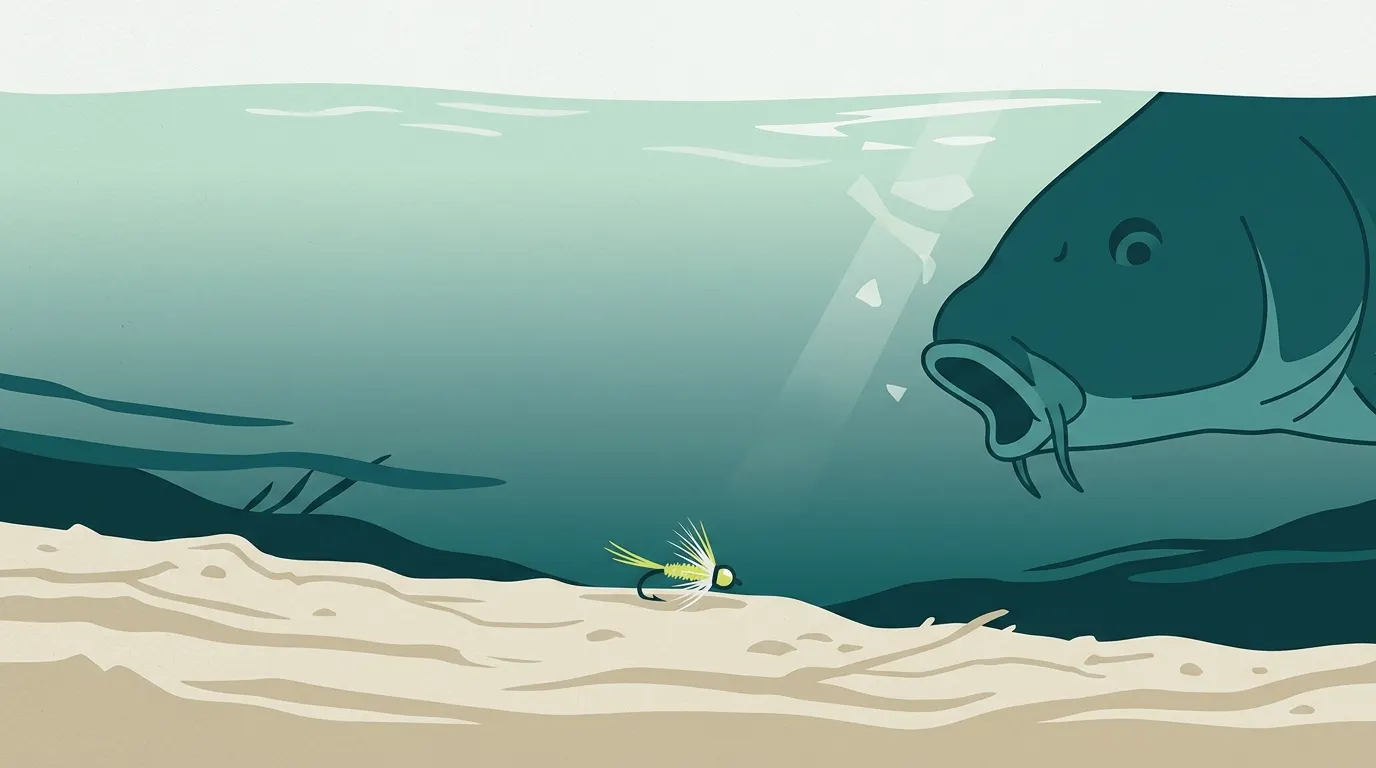
Sports Illustrated lists Woolly Buggers in sizes 2 to 8, Mop Flies in sizes 2 to 6, and nymphs such as Hare's Ears and Pat's Rubber Legs in sizes 6 to 8. Its general rule is that any fly that looks buggy and can be crawled or hopped along the bottom usually works. It also warns that weighted flies reach the strike zone quickly but too much weight causes a splash that can spook carp.
ToFlyFish names skinny Clousers, damselflies, scuds, dragonflies and crayfish imitations for retrieves, and midge or chironomid patterns as suspended or dropper flies. It also describes cicada and mulberry dry flies in season, and a cicada pattern that took a 38-pound grass carp. If you tie or buy a small set, a few Woolly Buggers, a few mop flies and a few weighted nymphs cover the lists above.
Finding carp
Sports Illustrated says the best spot is the flats: large, shallow areas 1 to 3 feet deep where carp feed on nymphs, crayfish and leeches, and where clear water lets you see fish from a distance. In lakes, it suggests a topographic map to read the bottom, and a water gauge or data site to check levels before you go.
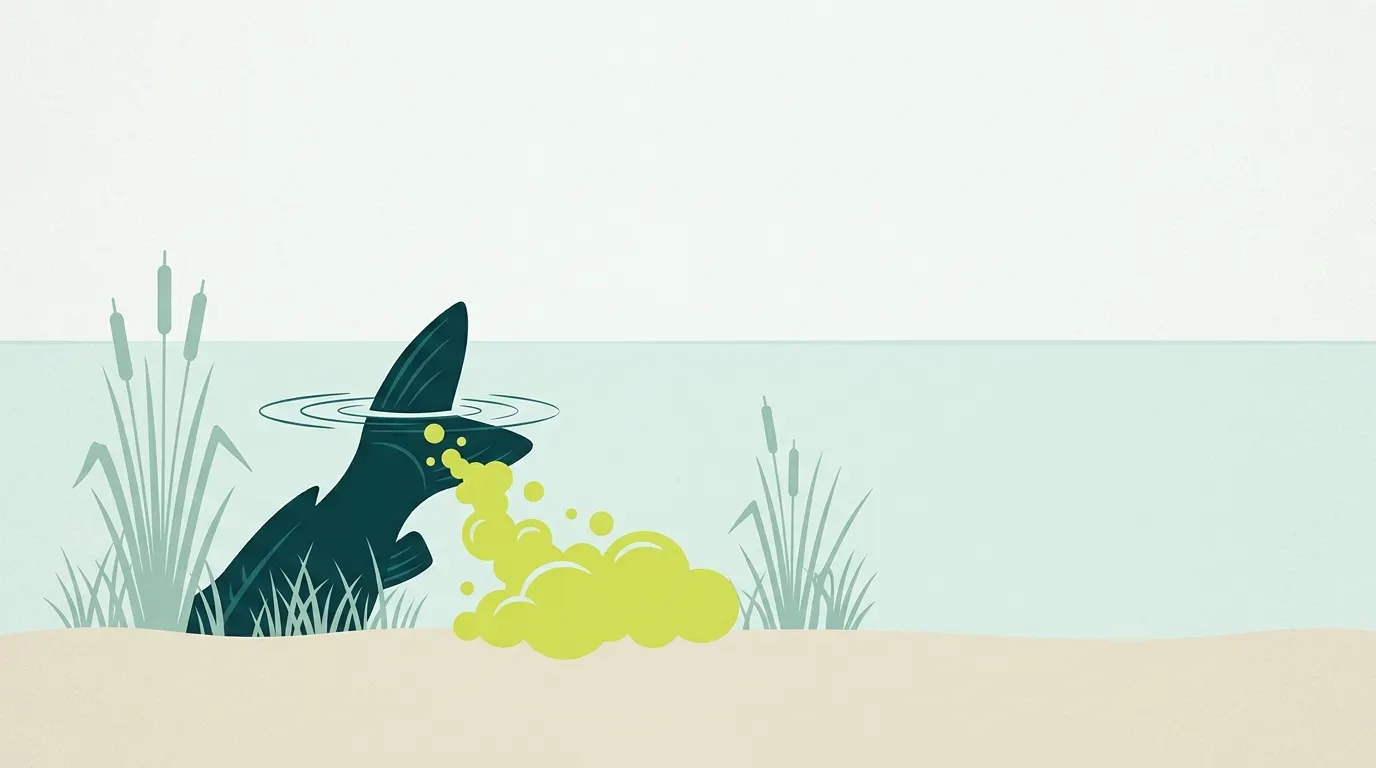
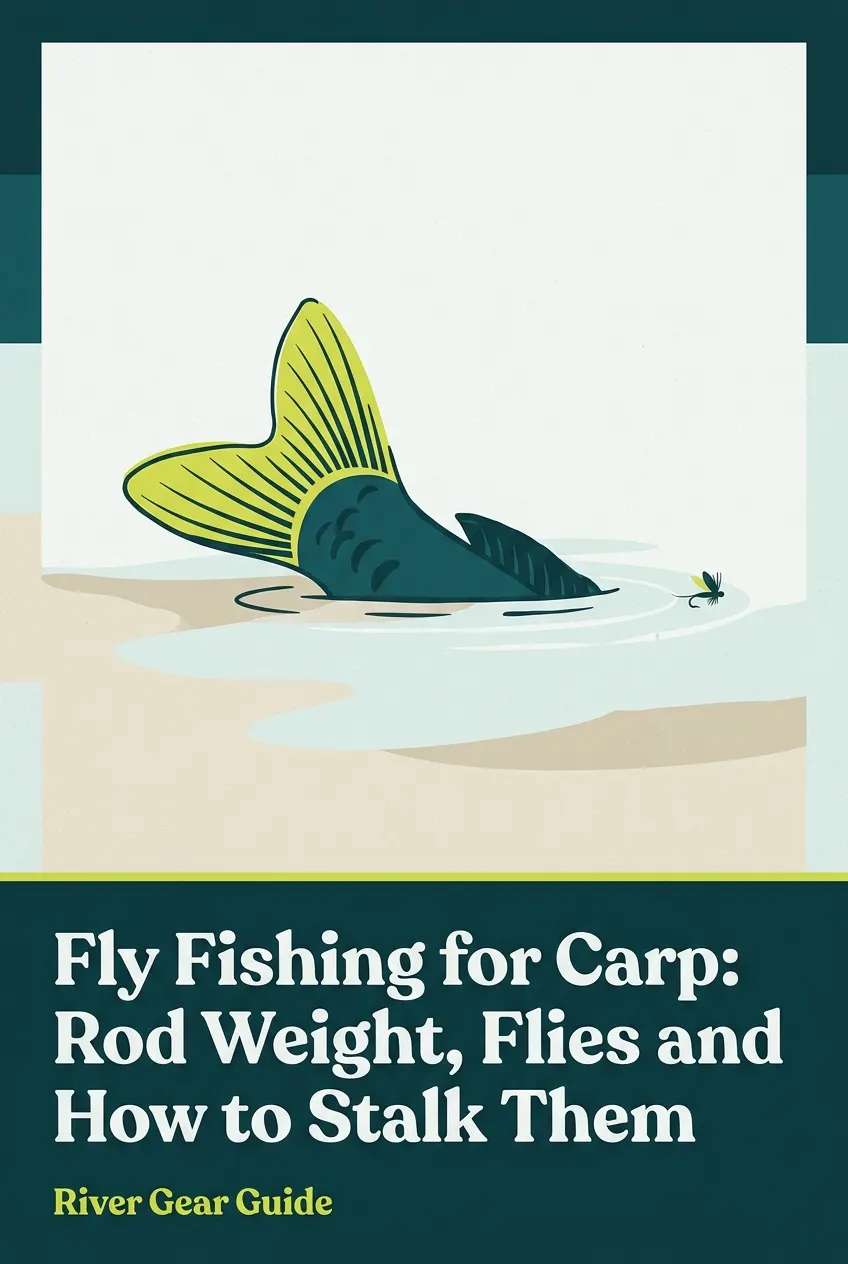
The signs of feeding fish are mud clouds from rooting on the bottom and tails waving above the surface. ToFlyFish adds that good targets are moderate-to-slow swimmers, non-linear movers, and feeding fish, while spawning fish, fleeing fish and fast linear cruisers are poor targets. It also notes that carp can be taken by dead-drift nymphing in rivers, and in still water.
On timing, Sports Illustrated says carp are most active from early spring through late fall, when water temperature is above 60 degrees F.
Presentation
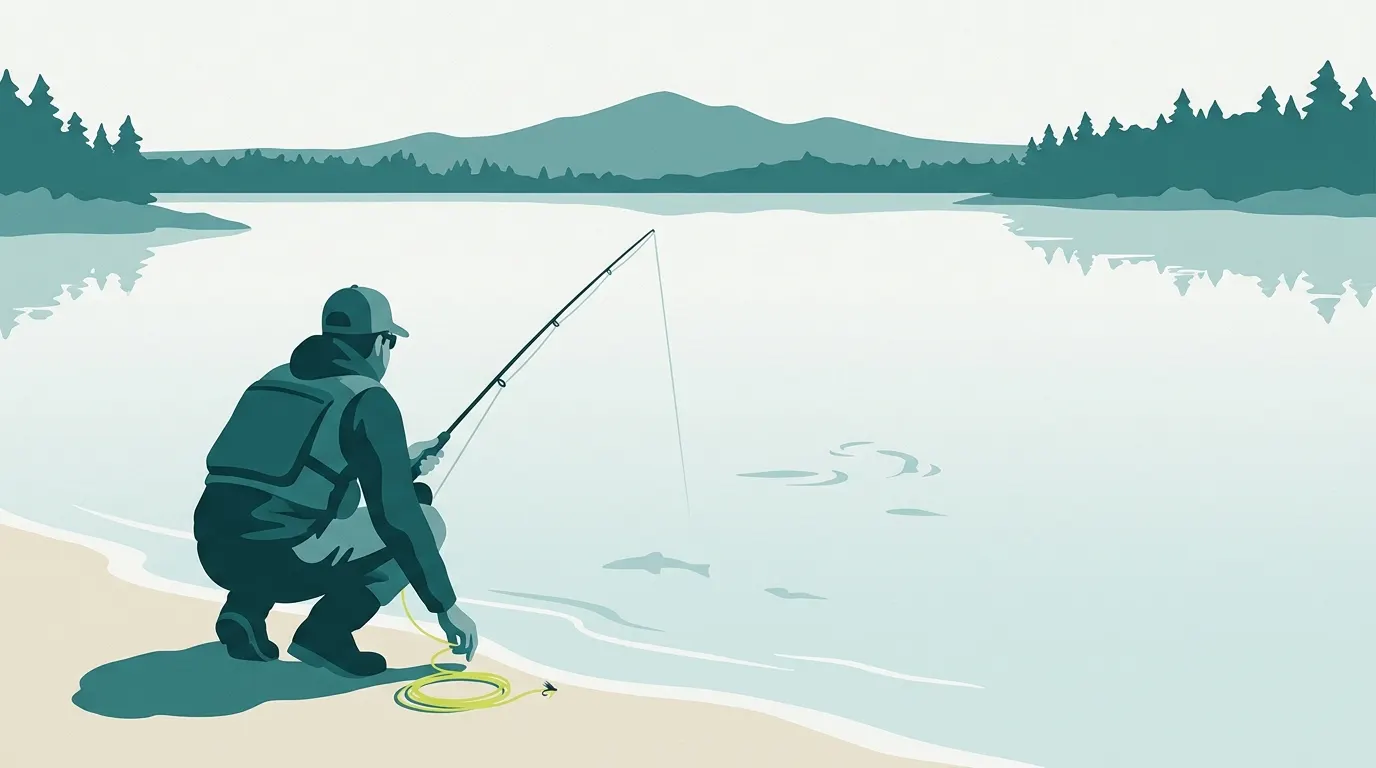
Stealth is the whole game. Sports Illustrated says to stalk carp on the flats with stealth and steady nerves, then cast accurately and quietly, because a loud or inaccurate presentation scares them off. It also notes that buck fever can cause sloppy casts. (Gary has had buck fever on a carp flat. Gary's fly landed on the carp.)
ToFlyFish describes several presentations, and three are worth knowing:
- Drag, drop and lay: cast beyond the fish, strip or drag the fly into position, then leave it once the fish has seen it.
- The drop as a trigger: drop the fly in front of the fish, avoiding splashes, using weight or split shot if needed.
- The claw, or modified dap: drop the fly directly in front of the fish with little or no cast, mainly for tailing fish, murky water or unpressured fish.
For murky water, it suggests attaching a small indicator 12 to 18 inches above the fly. It also says the author lifts the rod on the hookset at close distances.
Chumming comes up too. ToFlyFish says it is effective but not legal in every US state, and the author dislikes it. Check your state's rules before you try anything of the kind. Our guide stays out of it.
Wading and safety
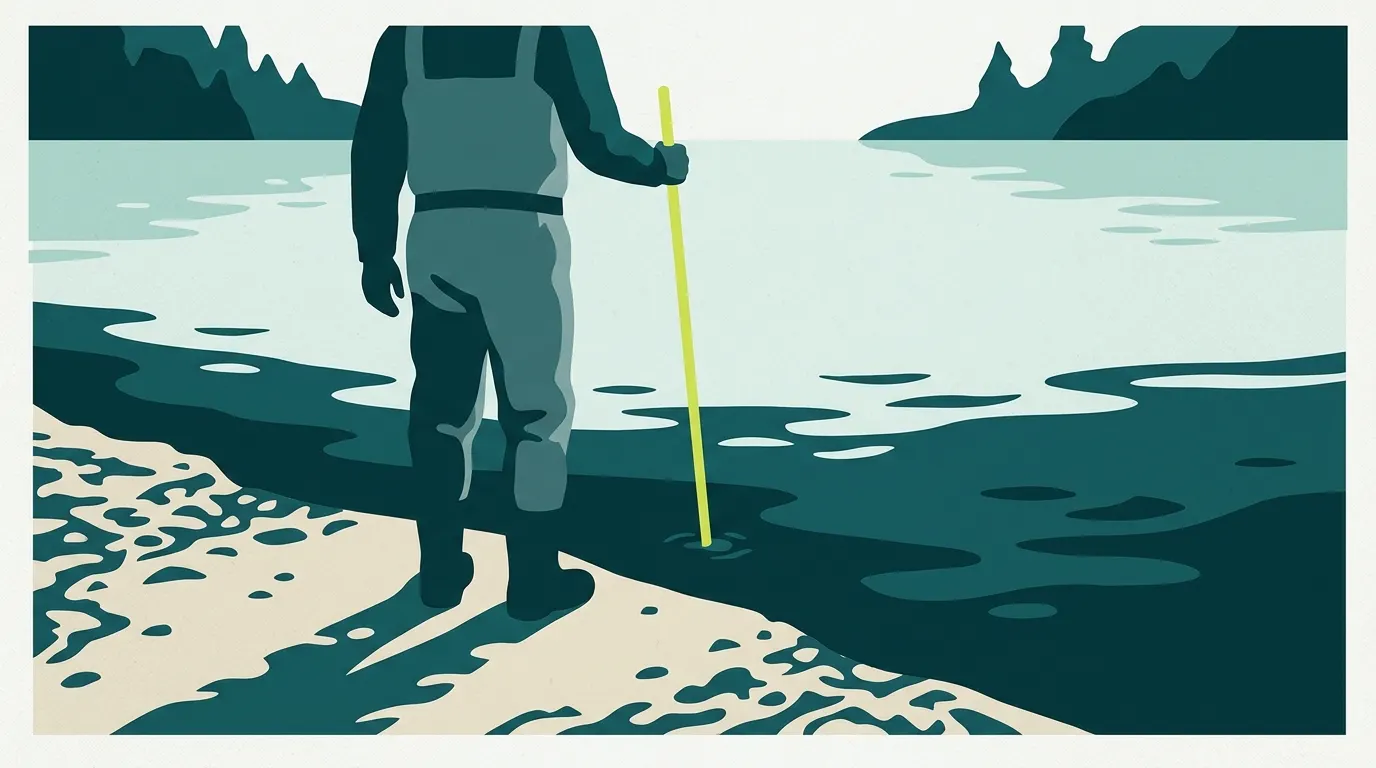
Flats fishing means walking in shallow water and sometimes soft mud. A wading belt and staff are sensible in unfamiliar shallows, and in my view breathable waders suit warm summer wading better than neoprene. Our wading staffs and wading belts pages list options, and the wet wading guide covers fishing without waders.
What to buy first
If carp are the target, the shortest list is:
- An 8-weight rod, 9 feet or so.
- A matching weight-forward floating line with a soft landing.
- A large-arbor reel with a smooth drag.
- 9-foot leaders and 10 to 12 pound fluorocarbon tippet.
- A few Woolly Buggers, mop flies and weighted nymphs.
If you already own an 8-weight for bass or streamers, it will do the job. Our fly fishing for bass guide covers the same rod from a different angle.
Questions people ask
What weight fly rod for carp?
ToFlyFish recommends 7- to 10-weight rods for most situations, with an 8-weight as a good all-round choice and a 9-weight when you meet many fish over 18 pounds. Sports Illustrated suggests 7 to 9 and names a 7-weight as the author's favorite. Both say a rod with a soft tip and a strong backbone lets you present quietly and still handle a big fish. The 8-weight is where the two ranges overlap most comfortably.
What fly line is best for carp?
Sports Illustrated says a basic weight-forward floating line. ToFlyFish says to match the line weight to the rod and choose a line that lands softly, avoiding aggressive front tapers, since carp fishing is mostly sight-fishing. A loud landing can scare a feeding fish.
What leader and tippet for carp?
Sports Illustrated suggests a 9-foot fluorocarbon leader tapering to 12-pound test. ToFlyFish gives leaders of 6 to 11 feet and tippet of 10 to 20 pounds, and says 1X is a good all-round size, with stronger tippet around cover or debris. Both sources lean toward shorter leaders in wind or at close range.
What flies do carp eat?
Sports Illustrated lists Woolly Buggers in sizes 2 to 8, Mop Flies in sizes 2 to 6, and nymphs such as Hare's Ears and Pat's Rubber Legs in sizes 6 to 8, and says any buggy fly that can be crawled or hopped along the bottom usually works. ToFlyFish also names skinny Clousers, damselflies, scuds, dragonflies, crayfish imitations, and cicada or mulberry dry flies in season.
When is the best time to fly fish for carp?
Sports Illustrated says carp are most active from early spring through late fall, when water temperatures are above 60 degrees F. ToFlyFish describes mulberry and cicada seasons as triggers and lists spawning fish among the poor targets.
Do carp fight hard on a fly rod?
Both sources say so. Sports Illustrated says carp make fast, powerful runs once hooked, which is why it recommends a reel with a good drag. ToFlyFish suggests a large-arbor reel that fits the rod.
Save this guide for later
Sources
- ToFlyFish: Fly fishing for carp, complete guide — accessed 2026-10-15
- Sports Illustrated: How to fly fish for carp — accessed 2026-10-15