The short answer
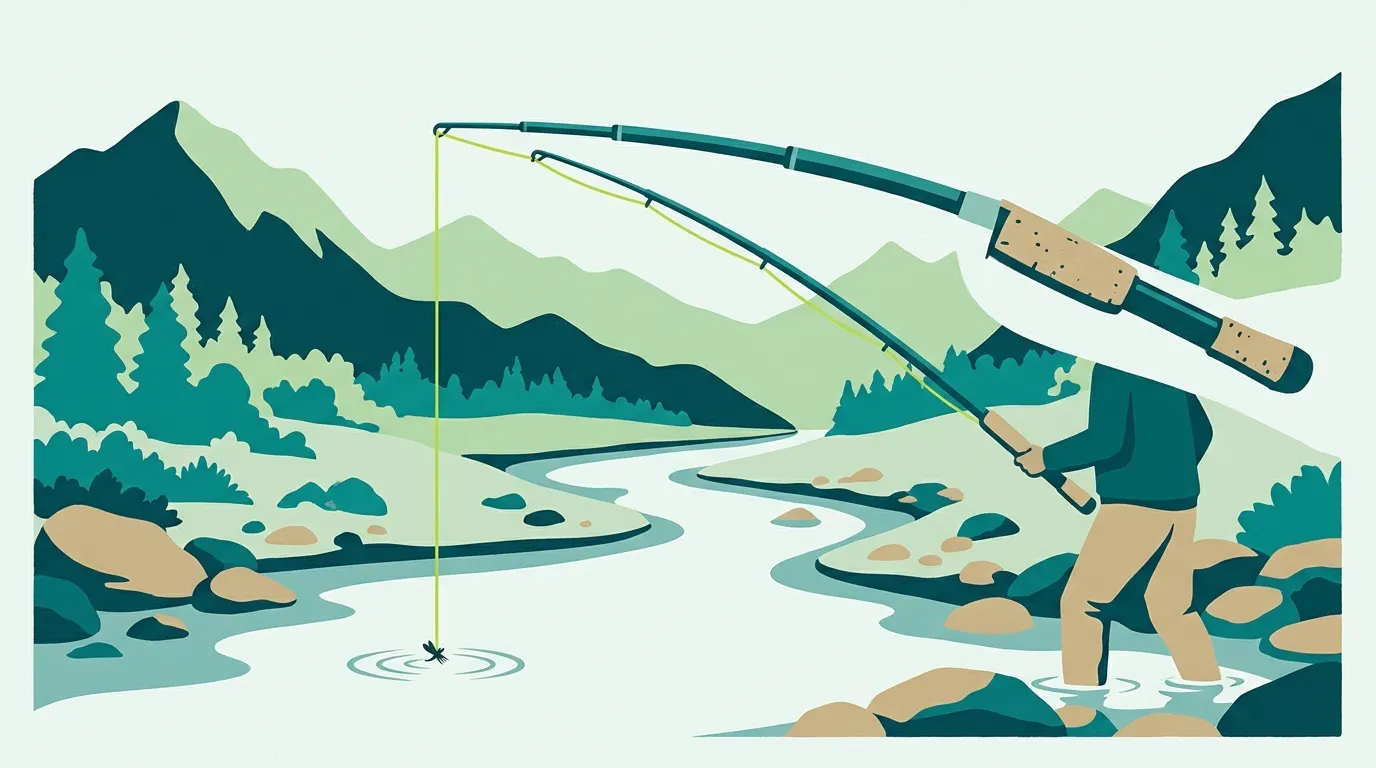
Choose tenkara if you fish small to medium streams, want to carry very little, and like the idea of one rod, one line and a few flies. Choose western fly fishing if you want to cover big water, cast farther, fish heavier flies or expect fish that take line. Both are fly fishing: the fly is cast by the weight of the line, and the fish does not care which one you used.
We list tenkara rods on the tenkara rods page, and standard rods on fly rods. Our what is tenkara guide covers the basics.
Rod and reel
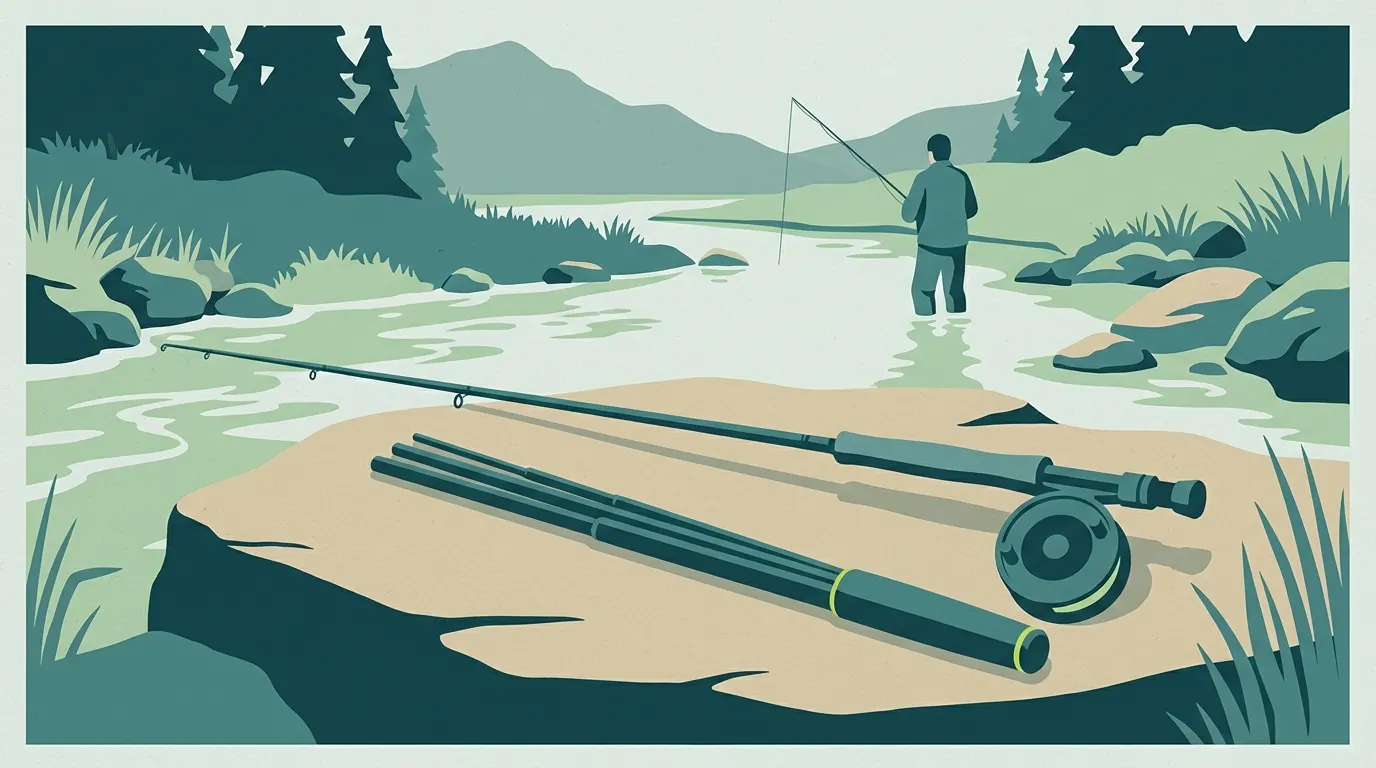
The headline difference is the reel, or the lack of one. FishTalk describes tenkara rods as about 12 feet long, carbon fiber and telescopic, collapsing to about 18 inches and weighing about three ounces. A tenkara rod has no reel seat at all: the line is attached directly to the rod tip.
A western outfit is a rod, a reel, backing, fly line, leader and tippet. The reel stores the line and lets you let a fish run. Our fly reels page and the how to spool a fly reel guide cover that half.
Line
FishTalk says the tenkara line is usually about as long as the rod, with roughly three feet of tippet attached directly to the fly. Western fly line is described as a heavy, PVC-coated line. The line is where the casting physics sit: a western cast uses the weight of the line to carry the fly, and a tenkara cast is closer to carrying a light line and fly on a long rod.
Drag
This is the advantage tenkara claims most loudly. FishTalk says a western line droops onto the water, where currents grab it, and anglers counter that with mends. Tenkara's lighter, shorter line runs nearly straight and touches the surface only where it breaks through, so drag is almost absent. That is a real advantage on a stream with fast and slow lanes side by side. It is not a reason to say tenkara is better everywhere, because on a wide river you cannot reach the far lane with a 12-foot rod and a line the length of a rod.
Casting
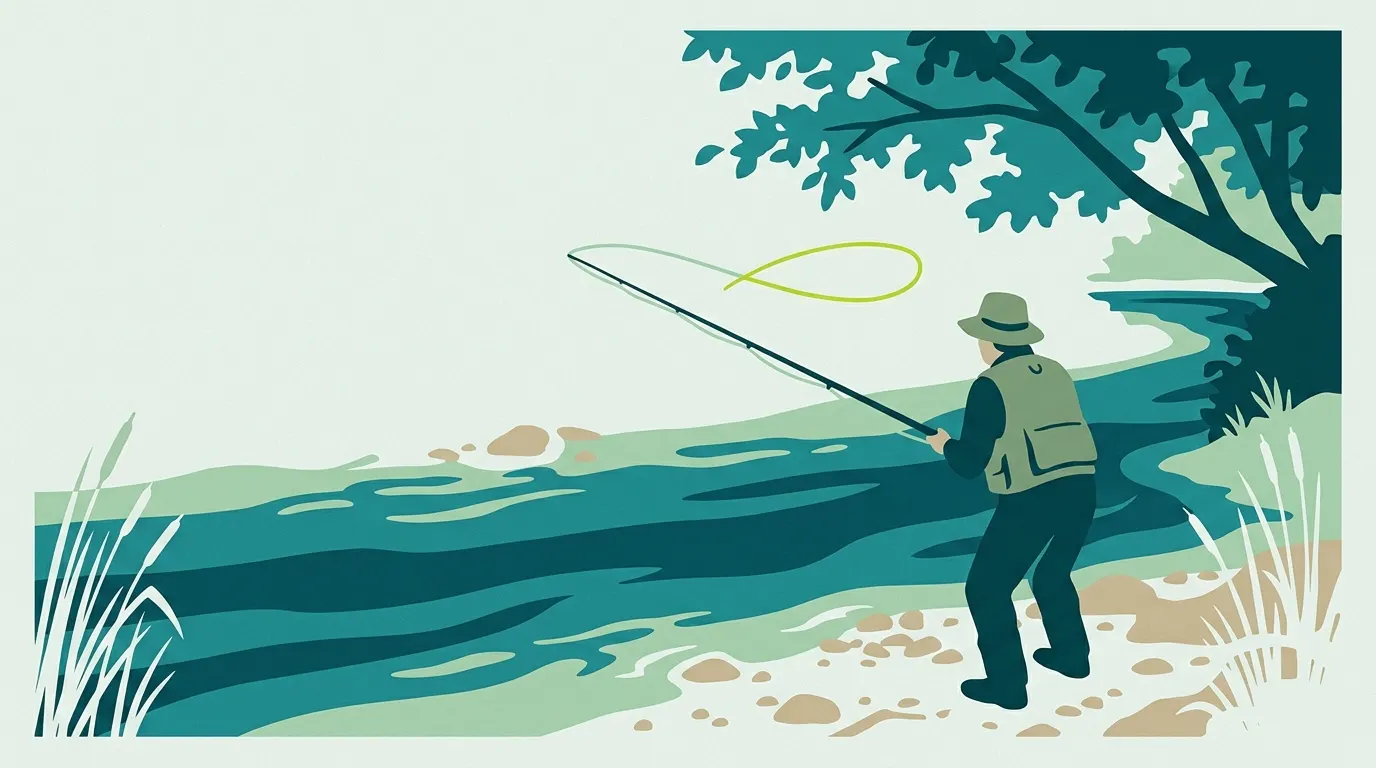
TenkaraTalk describes the western stroke as the rod tip moving in a fairly straight path parallel to the water, with fly and line often hitting the water together. Tenkara moves the tip on a diagonal path angled down toward the water, so the fly hits first and the line stays suspended above the surface. Stops are around 12 o'clock on the backcast and 2 o'clock on the forward cast, and beginners tend to take the backcast too far back.
FishTalk gives the clock faces: western 10 to 2, tenkara 11 to 1, with a lighter movement and usually no false casting. It estimates about 30 minutes of practice to learn. (A smaller stroke is easier on the shoulder and harder on the habit.)
Playing fish
With no reel, you bring the fish to you. FishTalk says tenkara anglers angle the wrist back, and that the flexible rod absorbs sudden runs and protects the tippet. The sources I read do not describe landing a large, fast fish this way, and I would not assume it works well. If you expect fish that peel line off a reel, use a reel.
Flies
FishTalk describes tenkara flies as impressionistic, with a thread body and one hackle tied to tilt forward, and says one-fly approaches are common in Japan but less so in the US. Western hackles tilt toward the rear of the hook. Nothing stops you tying western patterns on a tenkara line, and many people do. During a prolific hatch FishTalk says matching the real insect more closely pays off, so the one-fly idea has limits.
Where each fits
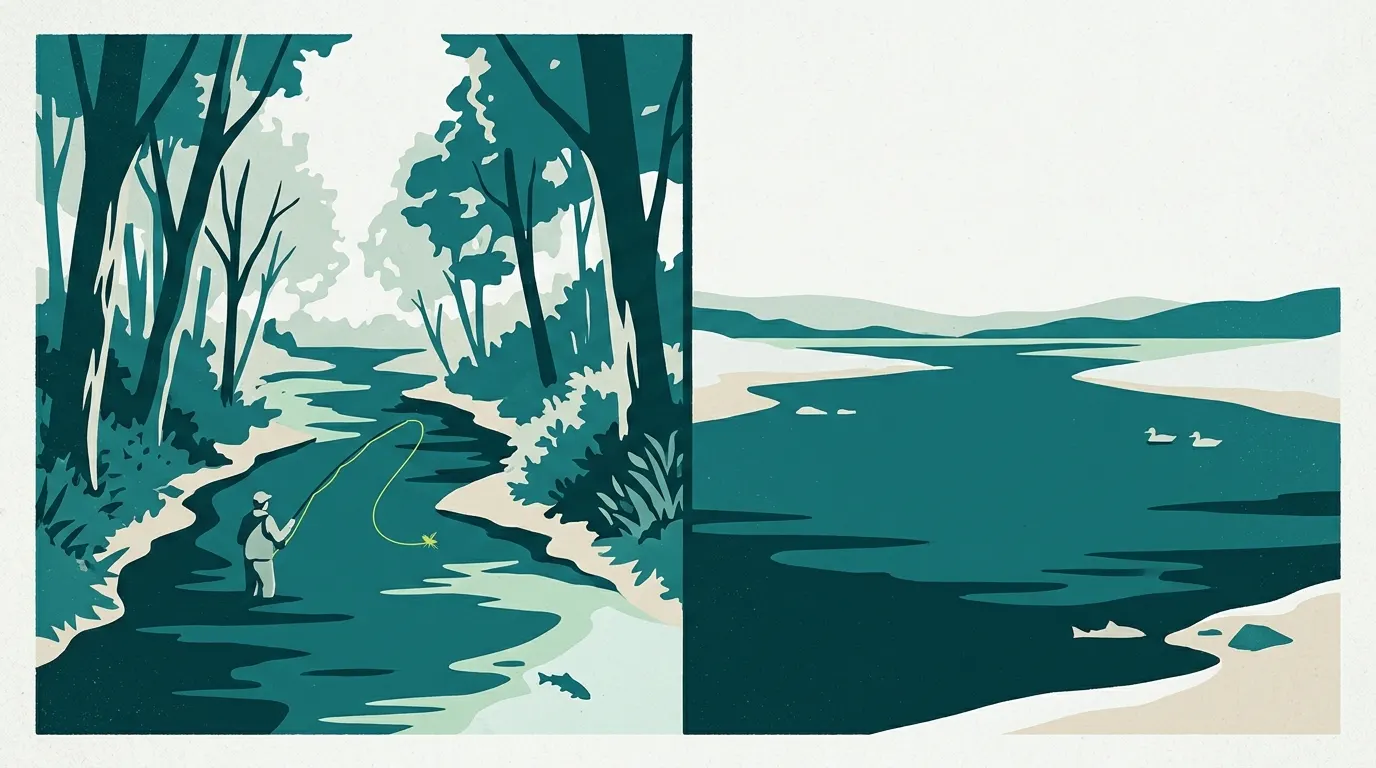
Tenkara began on small, steep Japanese streams where casts rarely needed to exceed 20 feet, FishTalk says, and it adds that tenkara also works in warm-water ponds, lakes and saltwater. Western gear is the versatile option for larger rivers, long casts and bigger fish, though neither source claims tenkara cannot fish those waters.
How to choose
- Small mountain or brushy streams, light pack: tenkara.
- Wide rivers, wind, long casts, big flies: western fly rod and reel. See fly rod length and the weight guides.
- Brand new to fly fishing: both work. Tenkara has fewer parts to buy; a western rod keeps more doors open. Our gear for beginners and fly fishing for trout guides help you decide.
Questions people ask
What is the difference between tenkara and fly fishing?
Tenkara uses a long telescopic rod with a fixed line and no reel. Western fly fishing uses a shorter rod, a reel and a heavy PVC-coated fly line. FishTalk says tenkara rods are about 12 feet, collapse to about 18 inches and weigh about three ounces.
Is tenkara easier than fly fishing?
It is simpler, since there is no reel, line weight or backing to choose. FishTalk estimates about 30 minutes of practice to learn the cast. Western anglers switching over often struggle at first, because the stroke is smaller and different.
How do you play a fish with no reel?
FishTalk says tenkara anglers angle the wrist back to bring the fish closer, and the flexible rod absorbs sudden runs and protects the tippet. That works for the fish a small stream holds. It is a limit when a fish is big enough to take line.
Where does tenkara work best?
On small streams. FishTalk says tenkara began on small, steep Japanese streams where casts rarely needed to exceed 20 feet, and also says it works in warm-water ponds, lakes and saltwater.
Do tenkara anglers use special flies?
Often, though not always. FishTalk describes tenkara flies as impressionistic, with a thread body and one hackle tied to tilt forward, while western hackles tilt toward the rear of the hook. During a heavy hatch it says matching the real insect more closely pays off.
Save this guide for later
Sources
- FishTalk: Tenkara fly fishing, a different approach — accessed 2026-10-15
- TenkaraTalk: Western vs tenkara, casting different strokes — accessed 2026-10-15